Our Churches · Wragby
Our Churches · Wragby
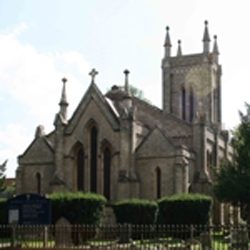
The present church replaced earlier Saxon and Norman churches that once stood on the site, close to what is now the old cemetery. The earlier medieval church became unstable through subsidence and was demolished around the time the current building went up in 1838, designed by the Lincoln architect William Adams Nicholson.
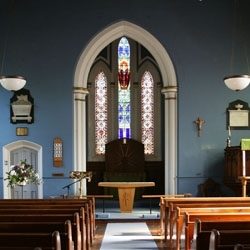
Unusually, the church stands on a North–South orientation rather than the traditional East–West, most likely dictated by the site itself. It was restored in 1897 and re-roofed in 1908. The East window holds stained glass by Wailes depicting the Bishop of Lincoln’s arms alongside those of local families, and a further window represents the theological virtues.
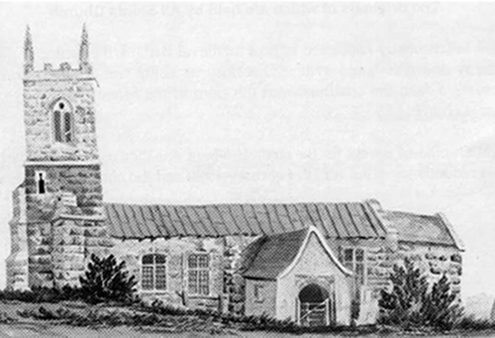
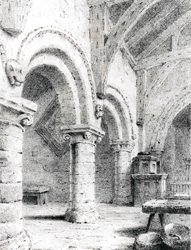
A pencil drawing of 1790 by the artist John Claude Nattes (1765–1839) survives, documenting the older Norman church before its demolition — showing characteristic Romanesque nave arcading, and a tower already leaning.
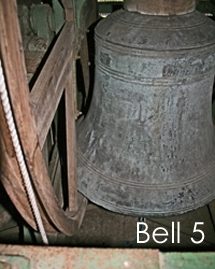
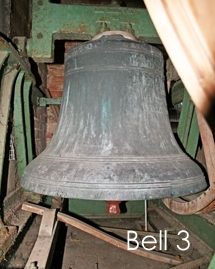
Wragby’s tower holds a peal of six bells with a remarkable history. The oldest pair — bells 4 and 5 — were cast in a Nottingham foundry between 1440 and 1510, long before the Reformation: bell 4 (“Katerine”) weighs 269kg, and bell 5 (“St Martin’s bell”) 347kg. A third ancient bell dates from 1590–1620, cast by Henry Oldfield of Nottingham.
These three bells originally hung in St Martin’s Church near Louth. When Sir Edmund Turnor demolished that church’s nave in 1690, he had the bells brought to Wragby in 1697, commissioning three further bells from Nottingham bellfounder William Noone that same year to make up a full peal of six — including the treble, inscribed “Tempore W Stephenson et F Wells 1697,” and the tenor, tuned to F sharp.
The bells moved into the new tower in 1838. Two were recast in 1890 at John Warner and Sons of London, and the whole peal was retuned at Taylors of Loughborough in 1972–74, when the original timber frame was replaced with metal. A new bell-ringing chamber was dedicated by the Bishop of Lincoln in 2004.
Please check What’s On for seasonal services, or contact us to confirm times before visiting.
You can reach your churchwardens, or the Rector, via our contact form.
Whether it's a question about a service, a wedding or baptism enquiry, or you'd just like to know more about the Group — fill in the form, or contact the Rector directly.
Send a message
The Rector reads every message personally and will get back to you as soon as he can.
Your details go straight to the Group — never shared with anyone else.